
Unpacking Involuntary Care: A Series
Part 2 - The History of Involuntary care in the province of british columbia
Please note that this post has historical and current descriptions of the treatment of people with mental illness, neurodiversity, and intellectual disabilities that some readers may find distressing.
We would also like to note that this is not an unbiased perspective, this is written by one of our co-founders from a lived/living experience perspective as someone who has experienced extensive violence through forced psychiatric care. Not every person will have the same experience with psychiatric care or forced treatment and in finding our way forward around this divisive topic, it is important to understand and respect the difference in people’s lived/living experiences.
We have tried to ensure to the best of our abilities that this information is accurate and up to date. We are open to feedback if any of the information we have provided is incorrect.
Preface
Pre-colonization, indigenous communities across what is now colonially known as “British Columbia”, had many practices and traditions to support their health and well-being across physical, emotional, social, and spiritual domains; these practices still exist today and provide resilience and healing in the face of the devastating impacts of colonization (1).
It is important to note that the views various indigenous communities traditionally hold towards those who experience the world differently, exist outside of colonial views of mental illness and Western psychiatry. We will largely be discussing BC’s history in colonial times which impacts Indigenous communities and other marginalized groups in significant ways. Solutions to these harms need to follow the leadership of Indigenous peoples, in all of their diversity, across these stolen lands.
The history of mental health treatment in British Columbia
In “Vancouver Island’s” early colonial days, instances of “insanity” were largely cared for by family members, but as the 1858 gold rush brought more settlers on to these stolen lands, many of these community members began to be housed in jails (2).
In 1872, due to public outcry, a small asylum (housing 7 patients) was built in the Victoria area (lək̓ʷəŋən traditional territories). A law was passed in the same year outlining the BC Supreme Court’s jurisdiction over “the persons and estates of idiots and lunatics.” This was followed by the Insane Asylum Act in 1873 (2).
Several years later in 1878, (due to increasing demand) a new asylum (called Essondale) was built in New Westminster followed by a hospital on the lands of the kʷikʷəƛ̓əm people (in Coquitlam) in 1913, which housed 453 male patients.) In later years, buildings were added to house the elderly and female patients. Chinese patients were housed separately. Children were also intermixed with this patient population up until the 1950s. This facility became known as “Riverview Hospital” in the mid-1960s (2).
At its peak, Riverview housed more than 4,000 patients (in the 1950s). Privacy became impossible with multiple patients crammed into small spaces (6).
Riverview closed in 2012 (8); the lands have since been re-named səmiq̓wəʔelə, which translates to Place of the Great Blue Heron in hən̓q̓əmin̓əm (3).
A facility (Colquitz) specifically dedicated to “criminally insane” male patients was opened on W̱SÁNEĆ traditional territory (Saanich) in 1919 to house some of the patients from Essondale (Riverview) (99 individuals by 1920). It was originally designed as a jail more than a treatment facility, though the distinction was arbitrary (2).
People with mental illness and intellectual disabilities were both warehoused in these facilities, though there were efforts to distinguish and separate these groups in later years (2).
Woodlands
Although the facility in New Westminster was originally developed as an asylum, over time it became focused on treating individuals categorized as developmentally disabled. In 1951, the name was changed to Woodlands School and eventually just Woodlands (4).
Conditions were reported to be overcrowded with insufficient water supply and poor ventilation (4).
Though it has been radically altered over the years since Woodland’s closure in 2003, the previous cemetery on the grounds became an unmarked mass grave of over 3,000 people (5).
An independent review (The Need to Know) in 2001 by the BC Ombudsman substantiated numerous claims by former residents of “physical, emotional, and sexual abuse that were systemic in nature” (6).
A class action lawsuit launched in 2002 was followed by a long legal battle to ensure all former residents from Woodlands were included in the settlement. Payments (of $10,000) to all survivors began in October 2018 (6).
Early Commissions & Reports on BC’s Psychiatric Hospitals
Royal Commission - Asylum for the Insane (1894)
“The commission uncovered a “story of cruelty and oppression” during its inquiry into the management of the asylum in New Westminster. Prisoners were tightly cinched in straight jackets, frequently handcuffed, and dunked in a bath of cold water with their feet and hands bound” (2).
The practice of continuous bathing (sometimes individuals were wrapped in wet sheets) in warm or cold water for hours to days was known as hydrotherapy; it was a common practice in the 20th century (10, 11, 12, see Appendix 1).
This kind of treatment is not historically unusual; psychiatry as a field is rife with examples of incredibly concerning, unscientific treatments for mental illness that were once considered front-line (Appendix 1 & 2.)
There are aspects of stimulations with cold therapy that can help to regulate the nervous system, but the way this is utilized in present day is vastly different than the hydrotherapy of the past.
Manual labour by patients was common, including farming, construction, logging, clearing land, etc. It is unclear what was voluntary and unpaid or paid, as well as what and if appropriate safety equipment was provided to patients undertaking these activities.
Select Committee - Provincial Lunatic Asylum (1900)
“This particular Committee noted that 25 Chinese patients, most of whom were [deemed] “unfit” to work, were housed in the asylum. ‘The Committee believe that an effort should be made to have this class of patients sent to China for treatment by their own government, and so relieve the Province of the burden of supporting them’” (2).
Information on these patients and what their treatment was like in Essondale’s early days is limited, but one cannot look at this time period in BC’s history without acknowledging the Chinese Exclusion Act (1923-1947). This piece of legislation led to many individuals being separated from their families abroad. Those who remained in Canada faced poverty, segregation, and intense racism; all of these factors may have played a role in determining these patients were “unfit to work” and their confinement at Essondale (15).
Royal Commission on Mental Hygiene (1928)
This Commission recommended “carefully and safeguarded measures of permissive sexual sterilization of certain suitable and definitely ascertained cases of mental abnormality...” upon completion of which, an individual might be able to return to their community (2).
BC’s disturbing Sexual Sterilization Act was passed in 1933, several years after this Commission made its recommendations (7).
Forced sterilization of people with mental illness and those with various intellectual or physical disabilities was practiced up until the 1970s. This was particularly weaponized against immigrants and Indigenous individuals (7).
De-Institutionalization
The introduction of neuroleptic medications in the 1950s and 60s as well the development of broader therapeutic techniques, contributed to the de-institutionalization movement that swept through the Western World (4.) Other factors included growing negative opinion about the warehousing of people in the context of a post Second World War era, as well as the incredible cost of maintaining psychiatric facilities.
With de-institutionalization there was a shift toward smaller, community-based services.
In 1957, a mental health treatment centre was established in Burnaby, followed by other facilities across the province (including Victoria’s Eric Martin Pavilion) throughout the 1960s.
By the 1970s, there were 30 facilities across the province (2).
The BC Mental Health act
In 1964, the BC Mental Health Act was passed (which consolidated 5 previous laws) (2).
Many aspects of this legislation are still in effect today including an “involuntary process based on certificates and the authority for facility staff to subject every patient detained in the mental health facility to ‘direction and discipline” (8).
Through the 1980s and 90s, a series of independent reports were released on the mental health system in BC. Many focused on the state of care, patient and family reports of unethical care, concerns related to the unconstitutional nature of BC’s broad sweeping Mental Health Act, as well as how the shift away from institutional treatment “was not part of a comprehensive policy and the mentally ill were generally moved into communities which were unable or unprepared to provide them with adequate support.” (2, 8, see Appendix 3)
Many of the concerns regarding BC’s unconstitutional and far-reaching Mental Health Act have yet to be rectified. Key issues identified include:
The “deemed consent” provision
Lack of access to basic rights advice
Lack of oversight and accountability
Broad, undefined powers over patients, particularly with respect to the use of restraints and seclusion
Failure to comply with the Act
Deemed Consent
Despite what Premier David Eby has stated in recent weeks about the purpose of the deemed consent provision (as merely providing protection for healthcare workers involved in administering involuntary care), the deemed consent provision also removes the right to be evaluated for the capacity to consent to treatment for those who are certified under the BC Mental Health Act (9).
“The deemed consent law also prevents people from making a plan while they are well about psychiatric treatment they want when they have a crisis and prohibits family members or friends from making psychiatric treatment decisions for people with involuntary status“ (9).
“BC is the only place in Canada where everyone with involuntary status is “deemed” to consent to all forms of psychiatric treatment, without safeguards like an assessment of their capacity to make treatment decisions, recourse to an independent decision maker, and an effective way for involuntary patients to challenge that treatment” (9).
In September 2016, the Council of Canadians with Disabilities and two individuals who had experienced forced psychiatric treatment, filed a Charter challenge to the deemed consent laws. The Charter Challenge case is based on the argument that denying individuals who have been labelled with mental illness, the basic right to an assessment of their capacity (as is the right of any voluntary patient in a healthcare setting) is a violation of their fundamental right to equality under the Canadian Charter of Rights and Freedoms.
For the past decade, the BC government has spent both time and money fighting to dismiss this case. However, in June 2022 the Supreme Court of Canada ruled that the case will continue and be heard in front of a judge in the BC Supreme Court. In the spring of 2025, lawyers finally presented their cases in front of a BC Supreme Court judge, with closing arguments occurring in the fall. A final decision is expected in the new year (2026).
In December 2025, the BC government passed Bill 32, which removes the phrase “treatment authorized by the director is deemed to be given with the consent of the patient” from the BC Mental Health Act (20). Premier David Eby stated this was done to ensure “protection for healthcare workers” and to clarify the purpose of the deemed consent provision; however, this change does not alter the consent rights for patients even if the phrase “deemed consent” is eliminated (meaning it also has no impact on the Charter challenge case). “It also does not include any additions to the Act that would ensure that [a patient’s] wishes and values, or people they choose and trust to know their wishes and values, are legally required to be included in treatment decisions” (20).
“The primary change is that the Mental Health Act will now clearly say that health care workers are only permitted to provide involuntary health care if it is authorized by the Director, “including treatment described in a consent to treatment form.” This last part refers to Form 5” (20, see Appendix 5).
What this change will mean is that proper documentation of a Director’s authorization for involuntary treatment will be required if healthcare workers want to avoid potential legal challenges. the “failure to properly document a Director’s authorization for involuntary treatment has been an ongoing issue under the Mental Health Act. The Ombudsperson’s office has found that, even though it is legally required, there are many instances where Form 5 is not completed at all or not completed adequately.”
This is something we will be exploring in our section on Failure to Comply with the Act (20).
Lack of access to basic rights advice for involuntary patients
Multiple concerning reports on the lack of access to basic rights advice during involuntary treatment and detention have been made over the past 35 years. For decades, patients relied on healthcare workers (with no training and often incomplete understandings of the legal implications of BC’s Mental Health Act) to provide basic rights information during involuntary detention (8).
The lack of consistency and accuracy in the information provided has meant that many patients never receive information about what their rights are under the BC Mental Health Act and what steps they can take if they contest their detention as an involuntary patient.
In 2022, after numerous attempts to better provide patients with access to independent legal services and rights advice, the BC Mental Health Act was amended to create the space for an Independent Rights Advice Service (IRAS) (8).
The IRAS launched in 2023 and is run by the Canadian Mental Health Association of BC and Health Justice BC. It continues to expand across the province (16) and marks a significant step forward in the fight for patient rights.
Lack of Oversight and Accountability
For a brief period between 1998 and 2001, the BC government created an independent Provincial Mental Health Office. This position was based on a the 1994 recommendation made by the BC Ombudsman in their report “Listening: A Review of Riverview Hospital” (8).
Nancy Hall (BA, MA, PhD) was selected for the position by a committee representing consumers, advocacy, and providers groups (17). Hall’s role as Provincial Mental Health Officer was “to monitor the performance of care systems and suggest policies, practices, programs and services for people with the most serious mental illness.” This included (17).
Reviewing quality of care issues
Advising the Ministry of Health on the adequacy of mental health services
Liaising with other local, regional, provincial and advocacy services
Helping to connect people with individual advocacy networks
Hall had her own lived experience as a family member of someone living with schizophrenia (17).
“In its first report, the Office document[ed] concerns expressed by people who experienced involuntary treatment and detention without being given basic advice about their rights and being treated ‘in a less than dignified manner. For example, being forcibly medicated or restrained or held in a locked room with [no] clothes or washroom facilities’’” (8)
Sadly, in 2001 with a change in government (the election of the BC Liberals), Hall’s position was eliminated. This was followed by cuts to legal aid funding. BC has not had another position like Hall’s, since that time.
Broad and ill-defined powers
Of particular concern, BC’s Mental Health Act (unlike other provincial legislation) does not place “any limits on when, how, or why someone can be subject to seclusion or restraints. There is no requirement that it be a last resort or only used to address serious safety risk. It also does not include a single safeguard for this unlimited power, including for children and youth, who are equally subject to direction and discipline under the Act” (18).
The only language used in the BC Mental Health Act that governs the use of restraints and seclusion is the following: “during detention, [an involuntary patient is] subject to the direction and discipline” of facility staff (18).
“There is no independent oversight of the use of seclusion and restraint, no way to review how and when they are used, and no accessible means to challenge their use. [Nor is there any] safe, accessible [way] in which an involuntary patient could hold a facility, health authority, or individual health care provider accountable for any disciplinary decisions” (18).
Other countries (and even other provinces in Canada) have better defined limitations and built-in safeguards for how, when, and why these types of extreme measures are used.
More than one member of our own team has experienced physical and chemical restraint, as well as seclusion, and being handcuffed by police (as children and in adulthood).
As a co-founder of Vancouver Island Voices for Eating Disorders, the individual writing this blog post, and a registered nurse working in an acute care setting, my own experiences of being restrained, sedated, and locked in seclusion have been deeply traumatizing and have forever shaped my relationship with healthcare (especially as I work in the same facility where some of these incidences have occurred.) It is difficult to know how to talk about these experiences and communicate how dehumanizing they were without slipping into descriptions akin to trauma pornography. I do not yet know how to do this well so read with care as this is meant for the people who have not lived it.
There are moments where I can understand the concern that led to the decisions being made about my “care” and what seemed “necessary” in those moments; I cannot say what might have happened if these extreme means of control were not utilized (I do understand and believe that people thought what they were doing was best) - all I can say is that it has forever changed my life in the same way that sexual assault did.
Fear around potential risk of harm to myself when I attempted to flee a locked psychiatric unit led to actual harm when four or so male security officers dragged me into a seclusion room, pinned me to the floor (face down), sat upon my back and legs, wrenched my arms behind me, removed my clothing, and had a nurse inject me with sedative medications. I was then tied to a bed in the prone position with my wrists, ankles, and waist restrained. Unfortunately, I was not physically well at the time and suffered significant side effects from the sedative medications which led to my blood pressure dropping to a critical low whenever I was mobilized to the washroom. On several occasions, I experienced a brief sinus pause (meaning I had no heart beat for roughly 20 seconds) and ceased breathing. At one point a “code blue” was called for a blood pressure of 50/30; however, no actual cardiac or respiratory arrest occurred and I was conscious (barely) enough to recall the code being called, but not able to understand that I was a patient (the subject of the code) and not a student nurse doing my practicum in the hospital. It took days for the sedatives to wear off and I experienced distressing extrapyrimidal side effects during that time (including oculogyric crisis). I could not lift my head without extreme dizziness, was not allowed to stand, use the bathroom, or be unaccompanied for several days.
There was nothing dignified or compassionate about that experience.
This incident led to my being labelled as a violent patient (also known as a “purple dot”) in my health authority. This label will follow me for the rest of my life and has resulted in more frequent escalation of interventions (e.g. handcuffs, restraint, sedation, and seclusion) in future encounters with healthcare, even when these have not been remotely necessary (no attempt to resist police taking me to the hospital, no attempt to leave the unit, harm myself, or others.) Even when I’ve gone to the ER for work related injuries (such as a needle stick injury), it has been written in my chart that I am presenting with “suicidal ideation” (although no staff member informed me of this or even did a proper suicide assessment). Labels create bias and bias shapes care.
Due to these experiences, when I am working as a nurse I panic every single time I see a security officer, people move to sedate someone (which I understand is sometimes necessary), or I encounter a clinician who cared for me during those admissions to hospital. I no longer reach out for help from any crisis services if I feel I am slipping into a state of crisis with my mental health because my experiences have taught me that the hospital will only make me worse and there are some fates worse than the risk I might pose to myself when I am not well. I say this with an appreciation that I would still urge others to reach out for help, but I understand when they don’t feel safe to and it speaks to the desperate need for peer-led crisis teams and safe non-clinical crisis spaces that do not involve police/security, forceful intervention, or acute hospital settings.
It does not matter who you are, where you come from, or what the truth of a situation is - you are utterly voiceless and powerless when swallowed by the system as an involuntary patient. I also recognize that occupy many forms of privilege and the treatment of folks who are multiply marginalized is far worse.
In those settings, everything you say and do is used against you and is only ever further proof of why you deserve what is happening to you. What you learn eventually is to shut up and comply if only to escape. When you collapse in utter defeat and lose any semblance of spirit, the system will see it as proof of the efficacy of treatment. What they don’t see is that you’ve given up entirely on yourself and your faith in humanity. The only antidote and the thing that has kept me alive when I reach this place of utter devastation, is community care (supportive friends and family and colleagues) and the re-kindling of my desire to change things, both through the individual interactions I have with my own patients, as well as in the broader system.
All of this exists at the same time that I still engage voluntarily with my outpatient psychiatrist, take psychiatric medications to help manage aspects of my diagnoses, and find these things helpful even though I oppose the Mental Health Industrial Complex (MHIC).
Failure to Comply with the Act
Another significant issue in BC’s mental healthcare system is the frequency of failure to comply with the BC Mental Health Act. This can occur in various ways from missing or incomplete paperwork, to detaining patients but providing no mental health treatment.
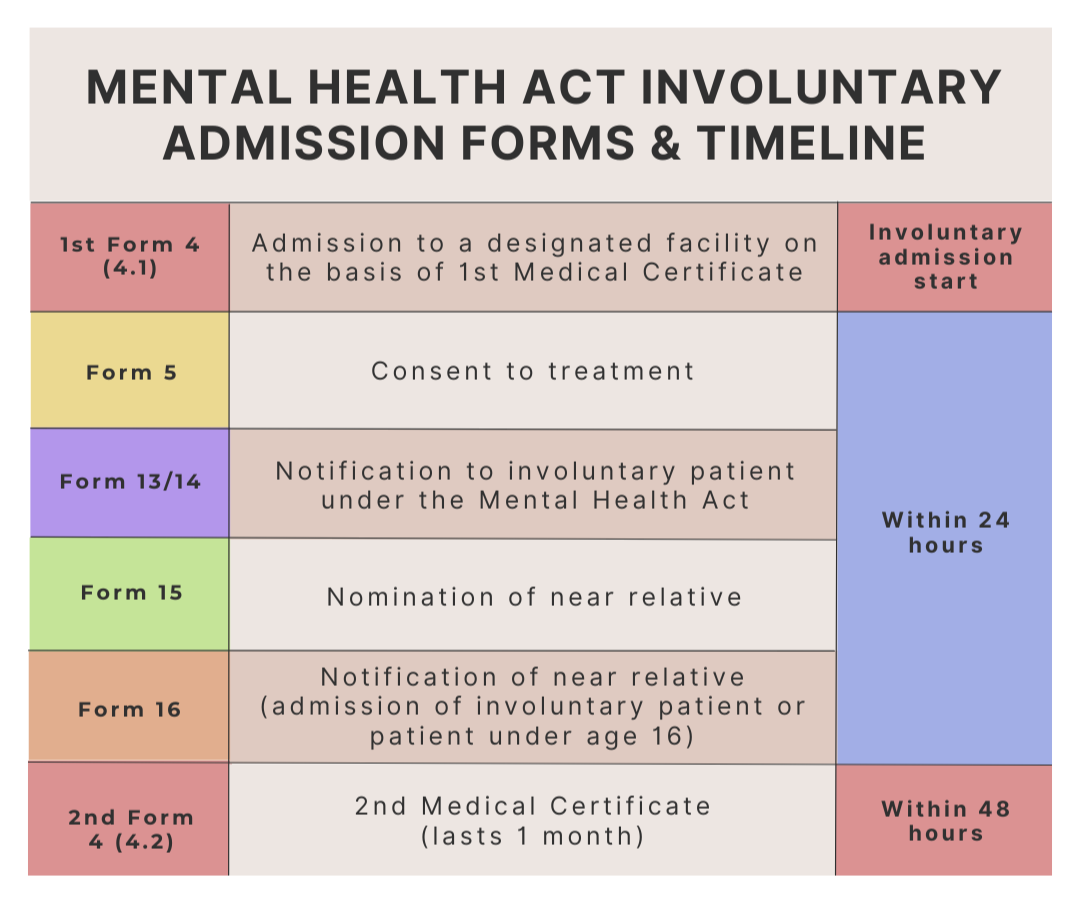
When an individual is sectioned under the BC Mental Health Act, a number of forms are required to be completed within a specific timeframe (see Appendix 4). In order for an individual to be admitted involuntarily, all of the following four criteria must be met; a physician must be of the opinion that an individual:
Is suffering from an apparent mental disorder that seriously impairs their ability to react appropriately to [their] environment or to associate with others;
Requires psychiatric treatment in or through a designated facility
Requires care, supervision, and control in (or through) a designated facility to prevent the person's substantial mental or physical deterioration, or for the person's own protection, or for the protection of others; and
Is not suitable as a voluntary patient
If all of the above criteria is met, a Form 4.1 must be completed by a physician or nurse practitioner licensed to practice medicine in British Columbia. The physician does not need to be a psychiatrist.
This form allows for the apprehension, transport, admission, treatment, and detention of an involuntary patient for 48 hours. A second form 4 (4.2) and assessment is required from a different physician (this must be a physician or as of 2025 certain health authorities allow senior resident psychiatric physicians) which extends the detention for up to 1 calendar month (minus 1 day). Previously, it was required that these two physicians be independent, but that criteria was eliminated in 1998 (8).
It is not uncommon for a second physician to not examine the patient at all and rather or to go along with what their colleague has written on the Form 4.1. It is also not uncommon for both Form 4.1 and 4.2 to be completely illegible (remember this is.a document that is removing the bodily autonomy of an individual, it should be a legible document, should it be brought up in a court of law), fail to establish the 4 criteria for involuntary admission, or fail to provide a reasonable diagnosis or description of why an individual is requiring involuntary care (for example, the single word “psychosis,” “depression,” or “eating disorder” does not provide sufficient information that meets the 4 criterion for involuntary admission.)
There are similar issues with incomplete documentation or failure to provide the correct forms to patients for Form 5, 13, 15, and 16.
One one occasion in my own involuntary hospitalizations, I asked for these forms 3 separate times and it was only when a colleague and friend of mine in a well known position of authority within the mental health advocacy world, called the unit directly to ask that the forms be given to me, that they were provided. Most people do not have that kind of connection to put pressure on the healthcare system.
In March of 2019, the BC Ombudsman released the report Committed to Change: Protecting the Rights of Involuntary Patients under the Mental Health Act. Disturbingly, “the report’s findings were based on a review of admission records of every involuntary admission in British Columbia in June 2017. A detailed analysis of mandatory admission forms found that across the province…
All of the required forms were completed in only 28 percent of involuntary patient admissions (21).
There was no consent for treatment form (Form 5) in 24 percent of patient admissions across all health authorities, with wide variation among hospitals (21).
Keep in mind what this means with the passing of Bill 32 this December…
There was no rights advice form – which advises patients of their legal rights, including how to get legal advice and challenge their detention – for more than half of the involuntary patients” (21).
The report ultimately made 24 recommendations, focusing on 3 key areas: increasing oversight and accountability, training staff and physicians on the importance of Form completion, and developing an independent rights advisor service (21).
In summary
Over the past 150 years, how we have treated the members of our communities who experience mental illness, neurodiversity, and cognitive differences has shifted dramatically in some ways, while remaining incredibly archaic in others. We are not so far from a past were homosexuality was a psychiatric diagnosis and irreversible neurosurgery or sexual sterilization was performed on people “for their own best interest.” While the world of science has advanced and human rights have come a long way, there remain significant and disturbing patterns in the ways we think about and treat those we deem mentally ill and/or disabled.
In today’s world I know I am incredibly fortunate I don’t live in an era of lobotomies - that I don’t face the same treatment landscape a great grandparent of mine did at Riverview Hospital in the mid-1900s. However, I do live in a world where many people believe that I do not deserve the same right to equality as they do under the Canadian Charter of Rights and Freedoms, or that I deserved the harms I’ve experienced from systems of “care” because it was for my own good (as defined by others); that those experiences under BC’s Mental Health Act constitute “dignified and compassionate care” as Premier David Eby so often likes to say.
I live in a world where the mental healthcare system started describing me as a hopeless case in my early twenties and where I’ve learned the most about hope in the face of insurmountable odds from people living in the darkest parts of their lives.
There is rage and grief at all the injustice, at all that hasn't changed, and the boldness with which people state their support for removing people’s right to bodily autonomy and choice. But if poring over BC’s mental health history over these past few weeks has shown me anything, it’s that the fight for equality, justice, and better options for people living with mental illness, neurodiversity, and disabilities, has been going on for just as long.
In our next blog post we will explore some options for how we can move forward in this province when it comes to involuntary care and the treatment of patients with mental illness. The one we must ensure that we do is include the voices of lived and living experience because there should be nothing about us, without us.
S. Ritchey
This blog post is dedicated to Health Justice BC, CMHA BC, and the Independent Advice Service (IRAS). It is also dedicated to the lawyers at CLAS BC who have worked incredibly hard to present their case on “deemed consent” in the BC Supreme Court. Whatever the outcome, their dedication to advocating for people’s right to equality under the Canadian Charter of Rights and Freedoms, will not be forgotten.
Appendices
Appendix 1 - Examples of Historical Psychiatric Treatments (10, 11, 12)
Insane asylums
Insulin shock therapy (to induce seizures and coma)
Lobotomies
Metrazol therapy (to induce seizures)
Hydrotherapy
Surgery and the removal of various organs
Malaria-induced fevers
Electroconvulsive therapy (which is still used today as a “safer” means of inducing seizures)
Though safer than previous means of inducing altered electrical activity in the brain, ECT is not without risks. These can include confusion, memory loss and resulting functional impairment (some individuals can no longer function in their line of work), physical side effects (headache), and potential complications (due to anaesthetic medications)
Appendix 2 - A Brief History of Psychiatry
As the Western world’s understanding of anatomy and physiology progressed, the study of the human brain and the origins of mental illness within the physical structure of the brain (or as a result of purely biological illness) remained elusive (10, 11, 12).
Some instances of mental illness were traceable to biological causes which was concluded through disturbing medical experimentation (e.g. infecting people with syphilis and observing the results as the disease progressed.)
Still, other forms of mental illness were not discernible, and purely biological disease processes did not seem to explain them, which created a further split in the field of psychiatry (a neurological vs. psychological focus).
This idea of the human ‘mind’ as distinct from the ‘brain’ stems from philosophy (e.g. Cartesian dualism) and it is still a fundamental question that the field of psychiatry struggles to consistently hold a point of view upon.
A primary example of psychiatry’s shift towards conceptualizing psychological phenomena as newly distinct from biological causes, can be seen with the diagnosis of “hysteria.”
Though it was first described medically in 1880 by Charcot, “hysteria” had been discussed in literature through the ages, stretching back to ancient Greece and Egypt as a sex-selective ailment (13).
Freud and Breuer shifted the study of hysteria from a physical ailment affecting the uterus or nervous system, toward a psychological cause, namely trauma and repression.
However, in the process of initially listening to female patients, Freud and other practitioners at the time were forced to confront the degree to which patients diagnosed with hysteria experienced sexual assault and/or other forms of abuse from the men in their lives (14).
Unfortunately, these clinicians turned away from this information (ultimately choosing to side with the perpetrators of violence over the victims) and individualized the problem, which was put back on these patients.
Recommended treatments at the time (in the 19th century) for hysterical patients included manual uterine massage by physicians (11). This was eventually replaced by the invention of vibrators.
Appendix 3 - Reports, Recommendations, & amendments
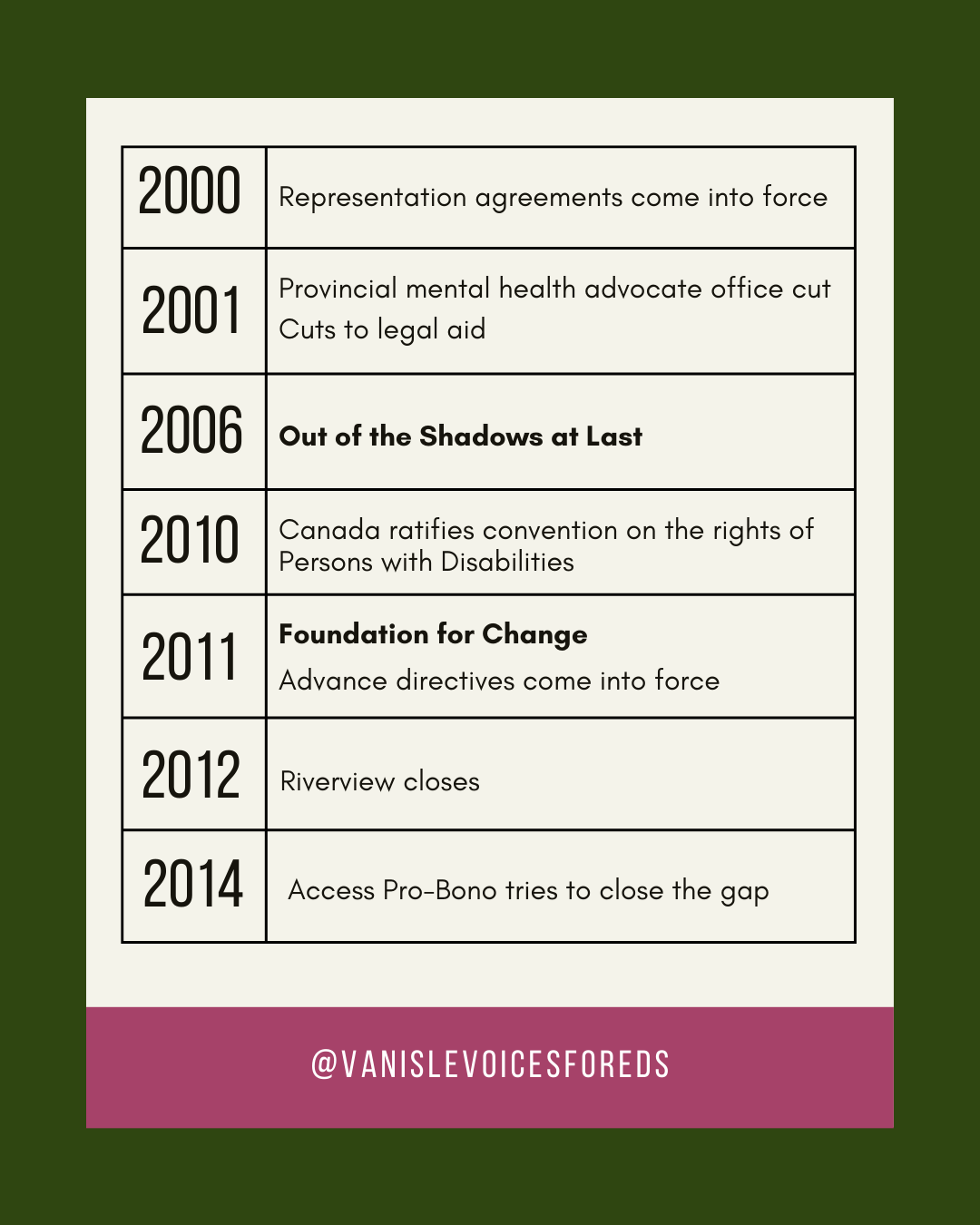
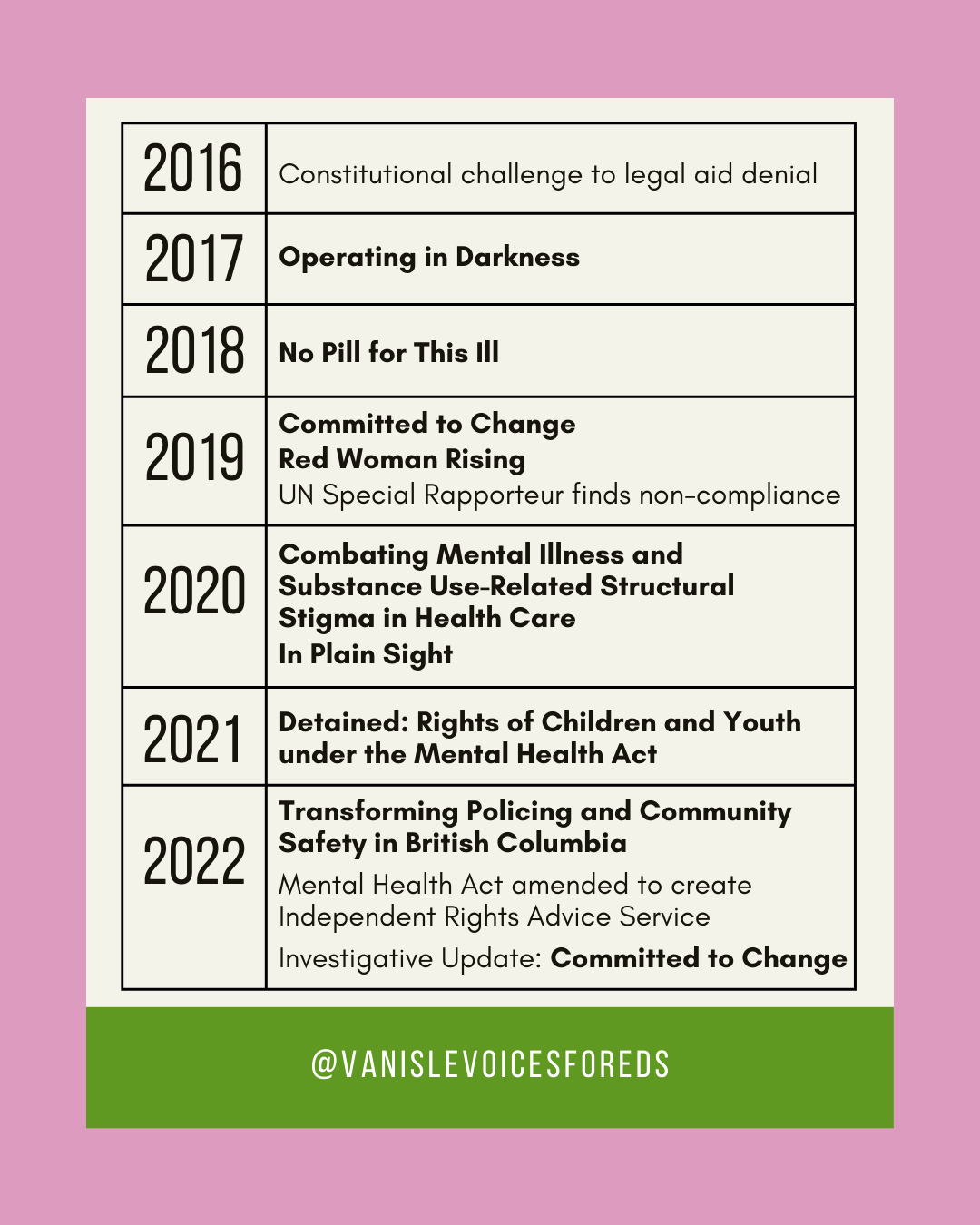
(See Reference 8 for source)

Appendix 4 - Mental Health Forms Timeline
Appendix 5 - Mental Health Forms
(see Reference 19 for source)
Form 4.1 (First Medical Certificate)
This Form sets out why the patient can be involuntarily admitted for up to 48 hours, and must be completed immediately following the psychiatric assessment.
A Form 4.1 must be co-signed by a Director/Delegate to initiate involuntary admission (depending on the institution, this could be a physician, nurse practitioner, head nurse, nurse or patient care manager).
Form 5 (Consent for Treatment)
This Form sets out the proposed psychiatric treatment, and either the patient or director must consent before any psychiatric treatment, including observation, restraints, seclusion, class of medications begins.
Notification and Nomination Forms (Form 13, 15, and 16)
These should be done as soon as possible after Form 4.1, within 24 hours
Form 13 (Notification of Rights)
This Form provides information about patient’s rights and must be read to the patient and a copy provided to them
If a patient is not capable of understanding the Form 13 on admission, the Form must be provided again once patient is capable of understanding. The physician should document that the patient was not capable of understanding the Form 13.
Form 15 (Nomination of Near Relative)
This Form allows a patient to nominate a near relative to be notified of admission and detention
Form 16 (Notification to Near Relative)
This Form notifies the near relative of the patient’s admission, detention and rights. If there is no known near relative, form is sent to Public Guardian and Trustee.
References
Our History, Our Health. FNHA.
Prepared by Emily Yearwood-Lee. Legislative Library of British Columbia. (2008, January). Mental Health Policies: Historical Overview.
Riverview Hospital Artifacts. Coquitlam BC website.
Madness Canada. The Provincial Asylum for the Insane (1878).
Michael de Courcy. Asylum: A Long, Last Look at Woodlands (1878-2003).
Inclusion BC. Institutions and People with Intellectual Disabilities: A BC History.
Stote, Karen. (2019, April 17th). Sterilization of Indigenous Women in Canada. The Canadian Encyclopedia
Health Justice BC. BC’s Mental Health Law Timeline.
CSP Global (2020, July 13th). A History of Mental Illness Treatment. Concordia University. https://online.csp.edu/resources/article/history-of-mental-illness-treatment/
Fanny Le bonhomme, Anatole Le bras. 2021, October 10th). Psychiatric institutions in Europe, nineteenth and twentieth century. Encyclopédie d'histoire numérique de l'Europe [online], ISSN 2677-6588. Permalink : https://ehne.fr/en/node/14132
Groopman, Jerome. (2019, May 20th). The Troubled History of Psychiatry. The New Yorker. https://www.newyorker.com/magazine/2019/05/27/the-troubled-history-of-psychiatry
The History of Hysteria. Office for Science and Society - McGill University. https://www.mcgill.ca/oss/article/history-quackery/history-hysteria
Herman, Judith. (1997, May 30th). Trauma & Recovery: The Aftermath of Violence from Domestic Abuse to Political Terror
Lee-Young, Joanne. (2023, June 30th). “Paper Trail” Exhibit Opens 100 Years After the Chinese Exclusion Act. Vancouver Sun.
What Is The Service? Independent Rights Advice Service
News Release: Mental Health Advocate Appointed (1998, August 6th). Ministry of Health
Seclusion and Restraints in BC: What We Know and What We Don’t Know. Health Justice BC
New Mental Health Act Amendments: What You Need to Know. (2025, December 4th). Health Justice BC.
Committed to Change: Protecting the Rights of Involuntary Patients Under the BC Mental Health Act. (2019, March). BC Ombudsman